A payroll warrant is a government-issued payment instrument used to pay wages. In this context, “warrant” refers to a public payment process, not an arrest order or an investment security. The attached earnings statement explains the payroll calculation; the warrant is the instrument used to deliver the amount due.
If your public-sector pay record uses this term, first identify the government issuer and whether payment was by paper warrant or direct deposit. That distinction determines whether you need a copy of the earnings record, a payment investigation or replacement of a missing instrument. This U.S. guide reviews official examples available in November 2026; state and local procedures differ.
Why do government payroll offices call a check a warrant?
The Texas Comptroller’s warrant overview describes a state check as a warrant and explains the treasury’s payment commitment. It also distinguishes the agency’s responsibility for distributing payments. A central treasury or controller can issue a payment that originated with another department.
That vocabulary is useful when asking for help: the name printed on the instrument may be the central issuer, while your employing agency holds the wage calculation and handles the initial inquiry. Do not assume every treasury warrant is payroll. Government issuers also make other kinds of payments, so verify the payment purpose.
Payroll warrant, pay stub and direct deposit advice: what is different?
| Record | What it explains or does | What it does not establish alone |
|---|---|---|
| Paper payroll warrant | Provides the government payment instrument for the amount shown | That you have deposited it or the bank has completed payment |
| Earnings statement or pay stub | Explains wages, taxes, deductions and net distribution | That a missing instrument has been replaced |
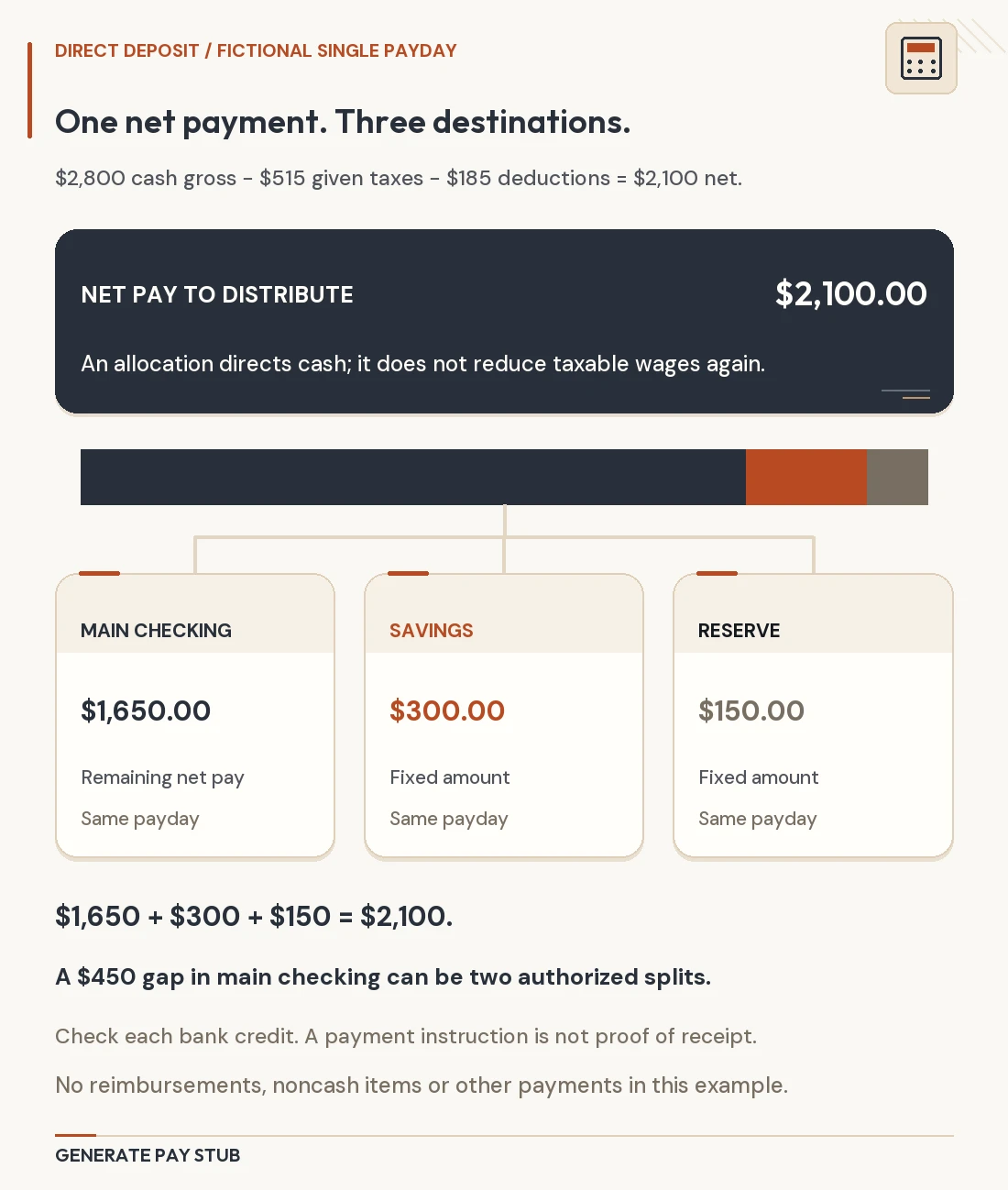
| Direct deposit advice | Documents the payroll payment information for an electronic distribution | That a paper warrant should also be cashed |
| Issuer’s payment status | Reports whether the particular payment is outstanding, stopped, paid or otherwise processed | Whether every wage item on the underlying payroll is correct |
For California state payroll, the Cal Employee Connect FAQ discusses earnings statements associated with both paper warrants and direct deposit advice. That is a useful example of one payroll record supporting different delivery methods. It does not mean every public employer uses that portal.
Save the complete earnings statement even when the payment reaches your bank electronically. A transaction line normally shows an amount and date, while the statement lets you trace how gross wages became net pay. Our gross-to-net explanation covers that calculation separately.
Which details help payroll identify the right warrant?
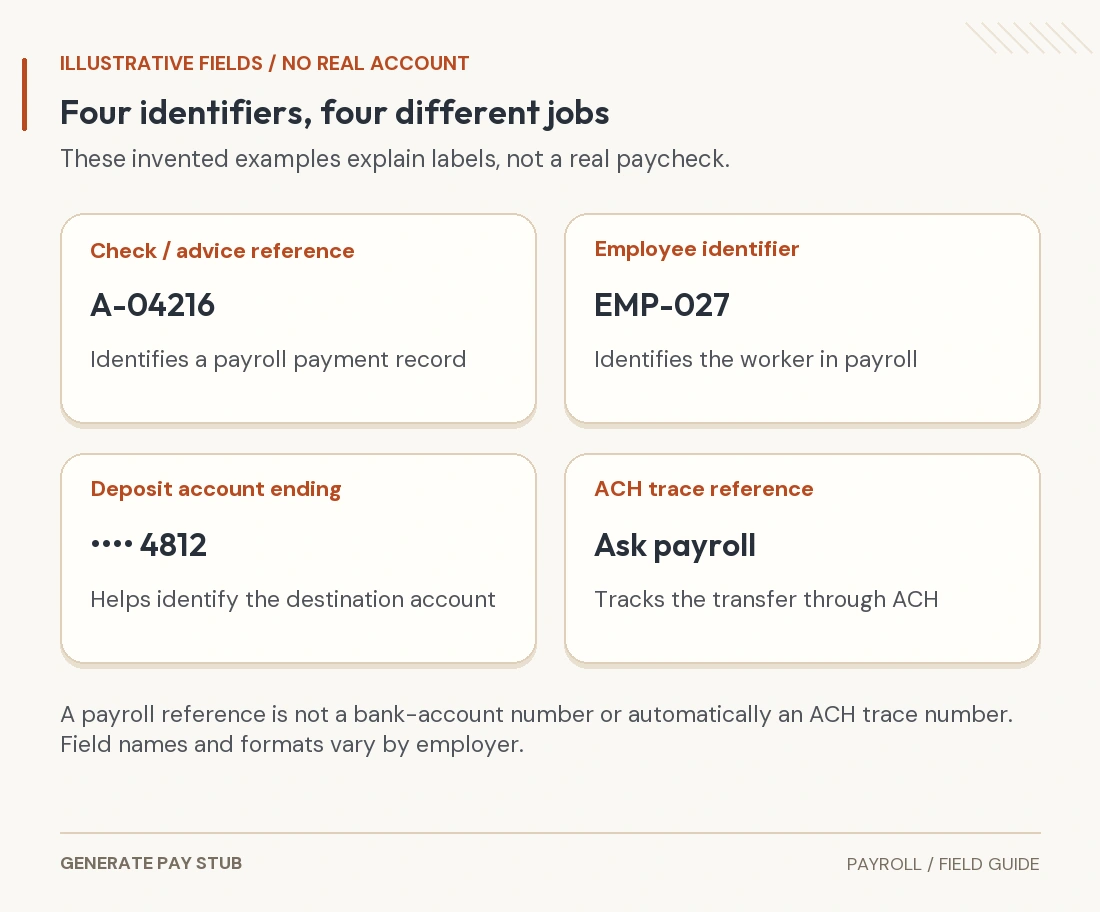
Record the employing agency, pay period, issue date, net amount and warrant reference. Keep the employee identifier separate from the instrument number. If there are multiple payments for regular wages, overtime or a correction, identify the specific one you are asking about.
A payroll reference is not automatically a bank routing number or electronic-transfer trace. The check and advice number guide explains why these identifiers have different jobs. Use the label on the official record rather than guessing from the number’s length.
When sending a request, describe the issue without exposing your full Social Security number or bank credentials in ordinary email. Use the agency’s established secure verification process if it needs additional identity information.
What to do if a payroll warrant is lost, stolen or never arrives
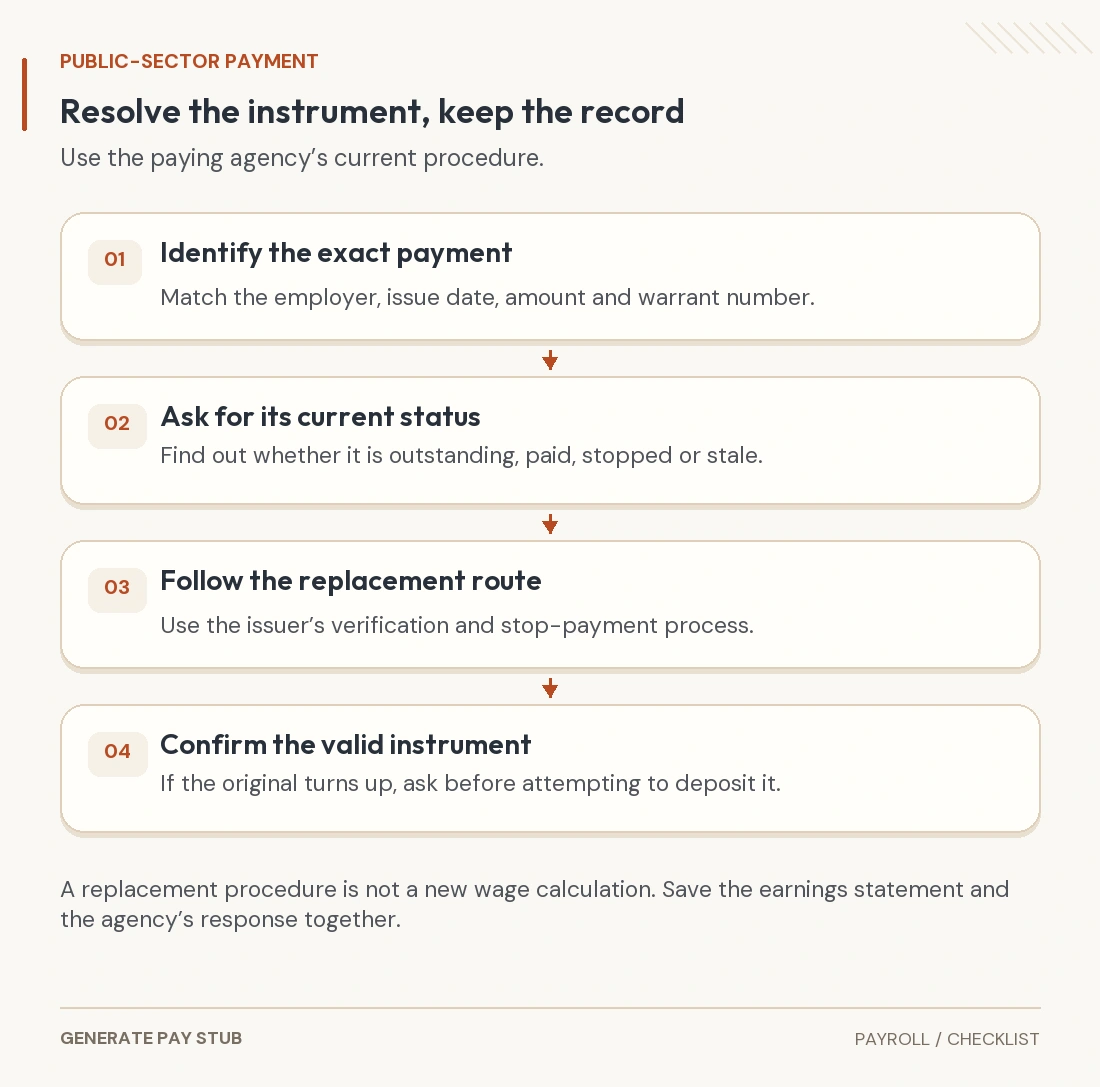
Contact the employing or paying agency promptly. Explain whether the original was never delivered, was later lost or may have been taken. Ask whether the payment remains outstanding and which stop-payment or replacement procedure applies. Keep the case reference and a copy of any affidavit you submit.
The California State Controller’s payment FAQ directs a lost-warrant inquiry to the agency that initiated payment for assistance with its duplicate-warrant/stop-payment process. Its address-change guidance likewise points to the originating agency. This is California’s process, not a national replacement form.

Do not deposit an original that turns up after a replacement has been arranged without checking with the issuer first. Follow its return or disposal instructions. Printing a copy of a pay stub does not create a negotiable replacement for a lost warrant.
Replacement processing can require identity checks, an affidavit and coordination between payroll and the disbursing office. Request the current expected timing and any available employer procedure for urgent hardship. This guide does not promise a universal turnaround or entitlement to an emergency advance.
How long is a payroll warrant valid?
Use the rule for the actual issuer and instrument. The California Controller FAQ describes its warrants as valid for one year from original issue, after which the payee should ask the initiating agency about reissue. San Francisco State University’s payroll guidance also directs holders of pay warrants over a year old to Payroll Administration.
Texas uses its own void-date framework and identifies exceptions for particular warrant types in the Comptroller overview. Its replacement-warrant policy says a replacement retains the original warrant’s fiscal-year and void-date treatment. Therefore, receiving a replacement does not automatically start a fresh validity period.
Do not substitute a remembered private-check convention, a different county’s rule or the issue date on a replacement for the applicable state instructions. If the date has passed, ask the agency which claim or reissue process remains available. An unusable instrument alone does not answer whether the underlying wage claim has been resolved or what deadlines apply.
Fictional example: a new reference is not new wages
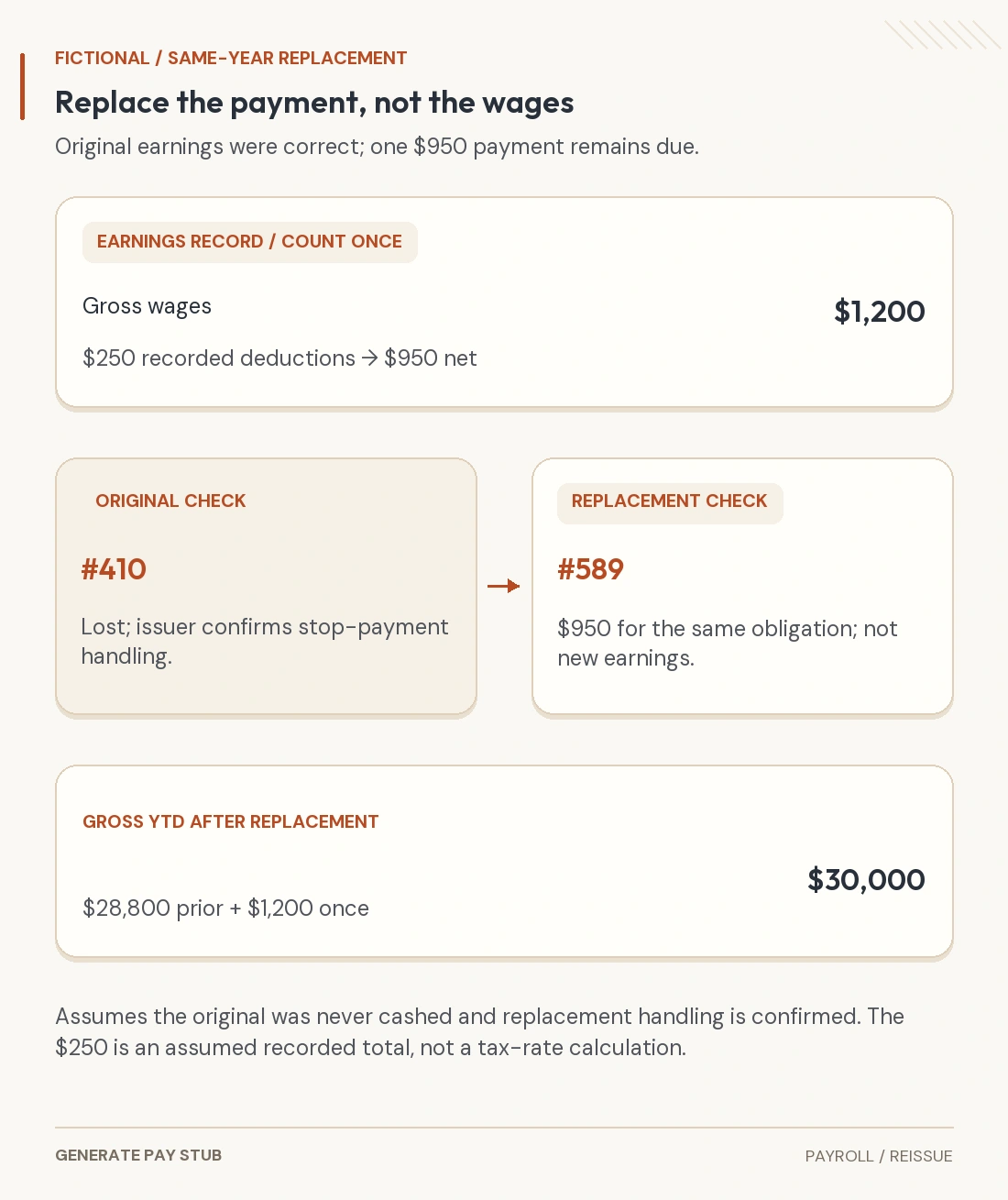
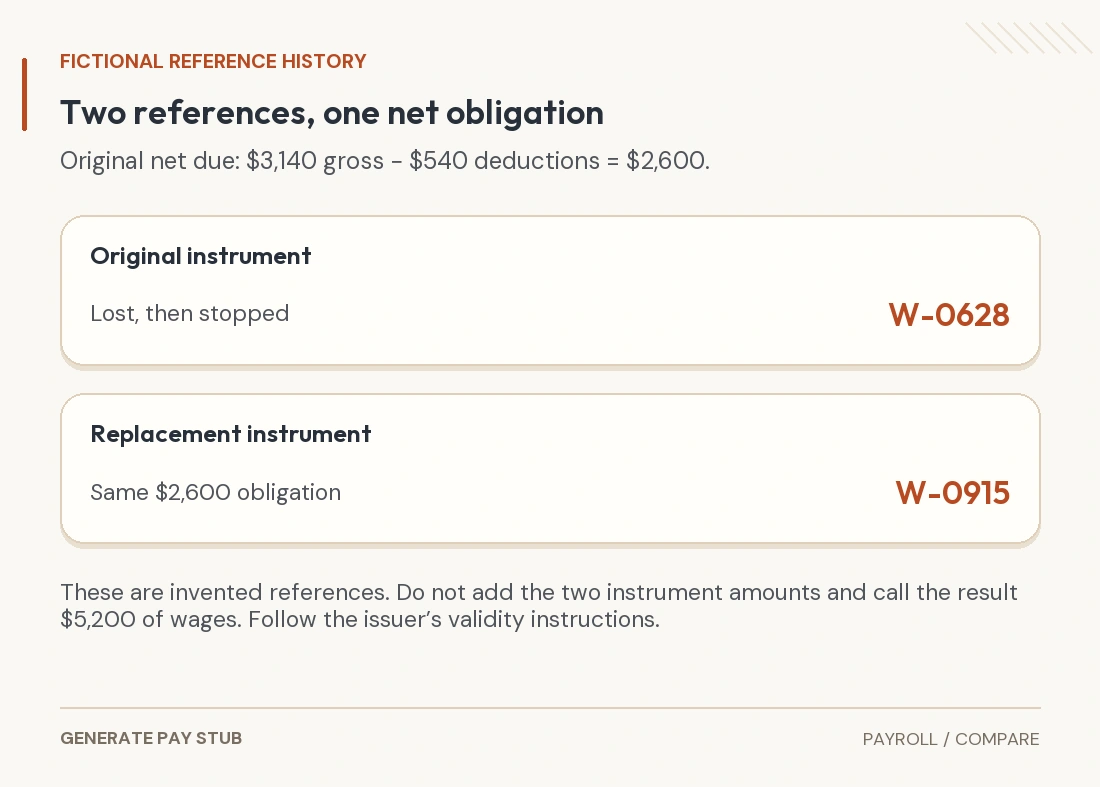
Assume a public employee’s original payroll has $3,140.00 gross wages, $540.00 of total deductions and $2,600.00 net due. Those are supplied fictional amounts, not a state withholding calculation. The warrant is lost before payment, and the issuer stops it and authorizes a replacement for the same net amount.

| Event | Reference and status | Net obligation |
|---|---|---|
| Original payroll created | W-0628; later reported lost and stopped | $2,600.00 |
| Replacement authorized | W-0915; replaces the stopped original | $2,600.00 |
| Additional wages created merely by replacement | None; delivery of the same obligation | $0.00 |
The employee should not add both reference amounts and report $5,200.00 as wages received. Preserve the link between the stopped original and its replacement. If payroll also corrects the underlying earnings, treat that adjustment as a separate calculation and request the revised statement. Do not decide W-2 treatment solely from counting paper instruments.
What if you use direct deposit, or the warrant is marked paid?
For a missing electronic payment, identify the net distribution and ask the employer to investigate the transfer, destination and any return. A record containing the word “warrant” does not prove a live paper item exists. Texas’s replacement policy specifically distinguishes its statewide payroll-system warrants from general USAS replacement options; an employee cannot assume a replacement will be electronic just because some state payments can be.
If the issuer reports a paper warrant as paid but you did not receive or endorse it, request its formal review process and available payment evidence. Preserve correspondence and report suspected misuse through the issuer’s actual instructions. A paid status is a starting point for investigation, not a reason to alter your earnings statement.
Common payroll warrant questions
Can a bank transaction replace the pay stub for income verification?
The recipient decides what evidence it accepts. A deposit can corroborate payment, but the complete official earnings record explains the period, gross earnings and deductions. Provide both when requested.
Can I request a replacement directly from any state treasury?
Start with the agency responsible for your payment. Central offices have different roles, and the issuer may require the employing agency to initiate cancellation or a claim.
Does the same expiry rule cover cities, counties and states?
No single rule is established here. Check the specific public employer and disbursing office before applying one government’s policy to another.