To accept a job offer in writing, identify the offer you are accepting, clearly state your decision, confirm the agreed role and start date, and follow the employer's response instructions. A short acceptance email or letter can work as a clear communication, but it does not replace a required portal response, signed offer or other requested step.
The hardest part is often deciding what to repeat. Too little context can leave the employer unsure which offer you mean; an unnecessary rewrite of every term can introduce mistakes. The aim is a precise response to an offer you have already reviewed.
Reviewed November 5, 2026. This U.S.-focused guide covers writing and reviewing an acceptance, with fictional examples. The legal effect of a particular message depends on the terms, facts and applicable law. It does not provide a universal contract rule or a fixed deadline for every candidate.
Are you accepting the offer or acknowledging that you received it?
Choose wording that matches your actual decision. Receiving a document, asking a question and accepting an agreed offer are different communications. Avoid putting an unconditional acceptance beside an unresolved request to change a material term.
Harvard's career center recommends reviewing the written offer, clarifying or negotiating before making a commitment, and following the employer's instructions for accepting. Its guidance is career advice rather than a statement of contract law for every job. Harvard MCS: Evaluating and negotiating offers.
| Your situation | Clear message purpose | Next action |
|---|---|---|
| You have received the offer and are reviewing it. | Acknowledge receipt and confirm the response timetable. | Read the written terms and collect any questions. |
| A material point is unresolved. | Ask for clarification, a revised offer or more decision time. | Obtain the answer before stating an unconditional acceptance. |
| You reviewed the final offer and decided to accept. | State acceptance of the identified offer and confirm key details. | Complete the employer’s requested acceptance process. |
For example, “Thank you; I have received the offer and will respond by the agreed deadline” communicates a different stage from “I am pleased to accept the offer dated November 9.” Neither sentence should be inserted automatically without considering what you intend to say.
What should you check before writing an acceptance?
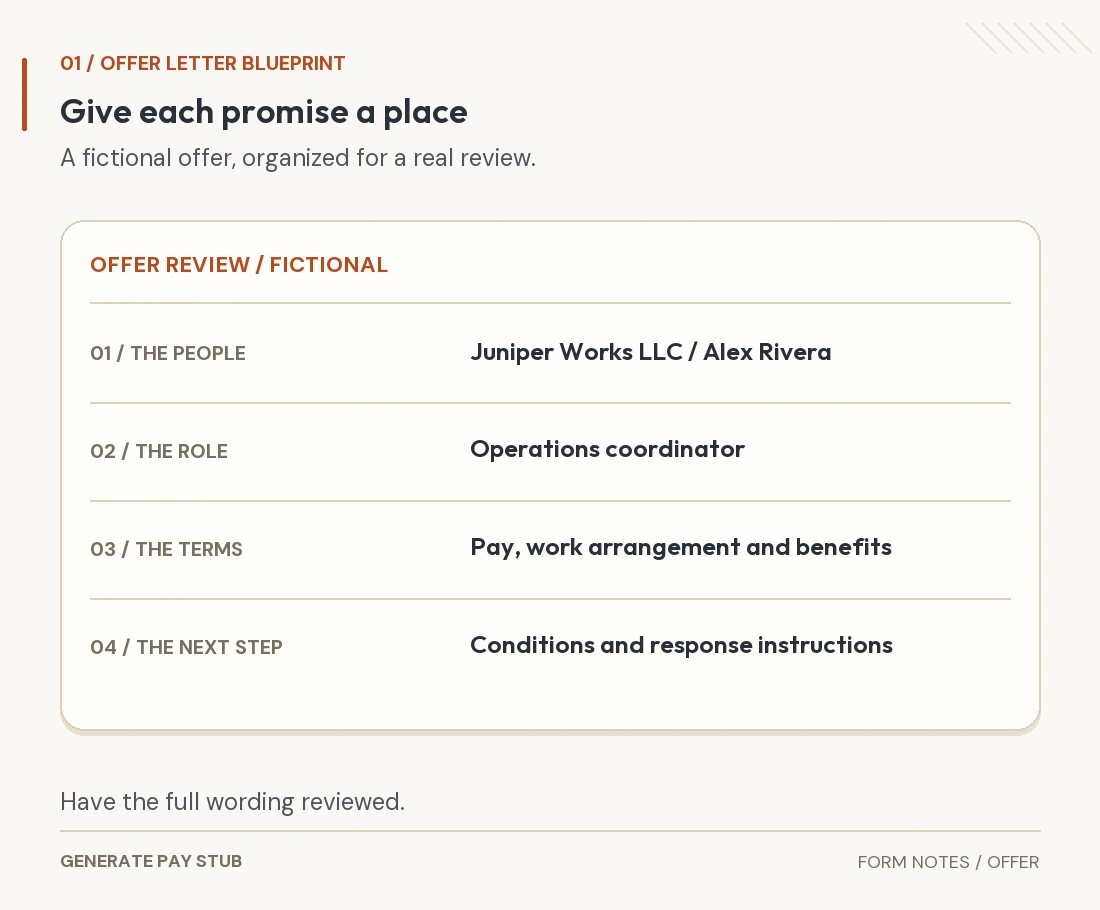
Use the latest approved written offer and its attachments. Check the employer, job title, compensation basis, work arrangement, proposed start, benefits information, conditions and response instructions. Resolve a discrepancy between a phone conversation and the written terms with the hiring contact.
CareerOneStop, sponsored by the U.S. Department of Labor, recommends considering salary, benefits, working conditions and personal fit, and obtaining the offer in writing. You can use those subjects as a review list without copying a salary assumption from an interview into your response. CareerOneStop: Negotiating and reviewing an offer.
Save the version you are reviewing. If the employer changes the salary or start date, ask for a revised document or clear written confirmation, then make sure your response refers to that version. Our employment offer-letter guide explains the employer-side terms and separate onboarding documents.
What should a job offer acceptance letter include?
Make the decision unmistakable and the reference easy to trace. A practical structure is:
- A recognizable subject or heading. Include your name and the accepted position.
- The appropriate recipient. Use the hiring contact or response destination provided by the employer.
- A clear statement of acceptance. Identify the employer, position and written offer by date or another useful reference.
- A concise confirmation of agreed facts. State the start date and, if useful, accurate compensation or work-arrangement details.
- The next-step request. Ask for confirmation of receipt and any remaining onboarding instructions.
- Your name and contact details. Add a signature if the required format calls for it.
This is an editorial writing framework. The employer's required form or acceptance process may ask for different details. Include only information relevant to the response; routine acceptance correspondence does not need to carry bank-account details or a Social Security number.
What is an example of a clear job offer acceptance email?
Keep the email focused on the accepted offer and the next step. The following names, role, dates and pay are fictional. It assumes the candidate has reviewed and agreed to the stated terms; it is not a message for someone still negotiating.
Subject: Jordan Lee — Client Support Specialist acceptance
Dear Hiring Team,
Thank you for the opportunity to join Cedar Harbor Systems. I am pleased to accept the Client Support Specialist position described in your revised offer dated November 9, 2026, with the agreed start date of November 23, 2026.
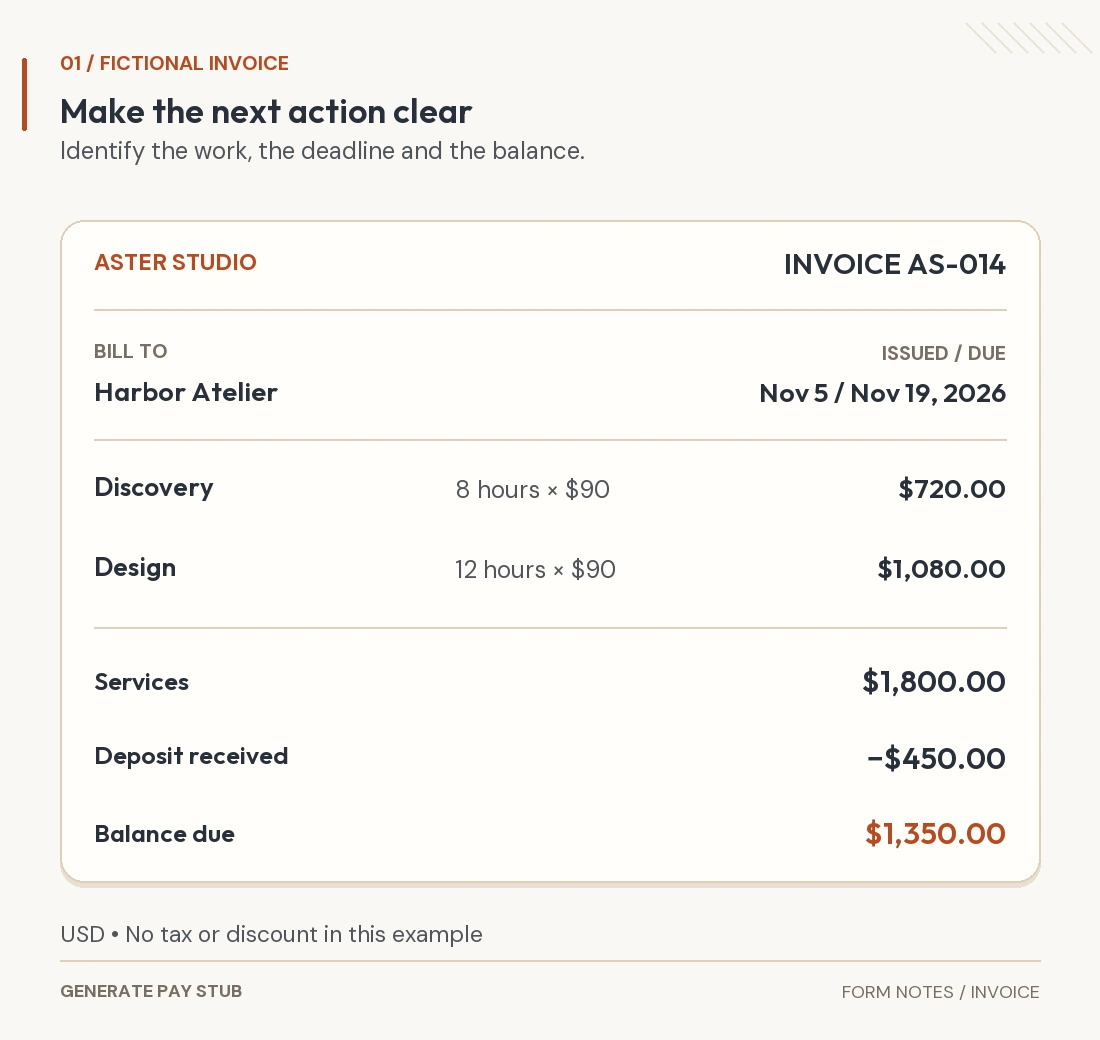
I understand the stated base salary is $62,400 per year, paid weekly, under the terms of that offer. Please confirm that you have received my response and let me know which acceptance documents and onboarding steps you need next.
I look forward to joining the team.
Jordan Lee
The compensation sentence is optional. If you include one, retain the amount's basis: “per year” is different from “per month” or “per pay period.” The example states gross base pay, not an after-tax deposit or a guarantee about the first paycheck.
If the employer requires a signed offer or portal acceptance, complete that step as instructed. Do not assume an email attachment has completed a process the employer specifically asked you to handle elsewhere.
How does a formal acceptance letter differ from an email?
A formal letter usually adds a document date, recipient block, closing and signature arrangement. The core decision can remain concise. You do not need to make it longer merely because it will be downloaded as a PDF.
A short alternative body might say:
I am writing to confirm acceptance of Cedar Harbor Systems' revised written offer of November 9, 2026, for the Client Support Specialist role. The agreed commencement date is November 23, 2026. Thank you for the opportunity. Please advise how you would like me to complete the remaining onboarding requirements.
Place this kind of body within a properly addressed letter, using your actual name and the agreed facts. Check whether the employer wants the offer itself signed, a separate letter or both. A typed name, drawn signature and printed signature line are different document choices; use a method accepted for the actual process rather than assuming appearance alone settles legal validity.
Which dates should stay separate in an acceptance?
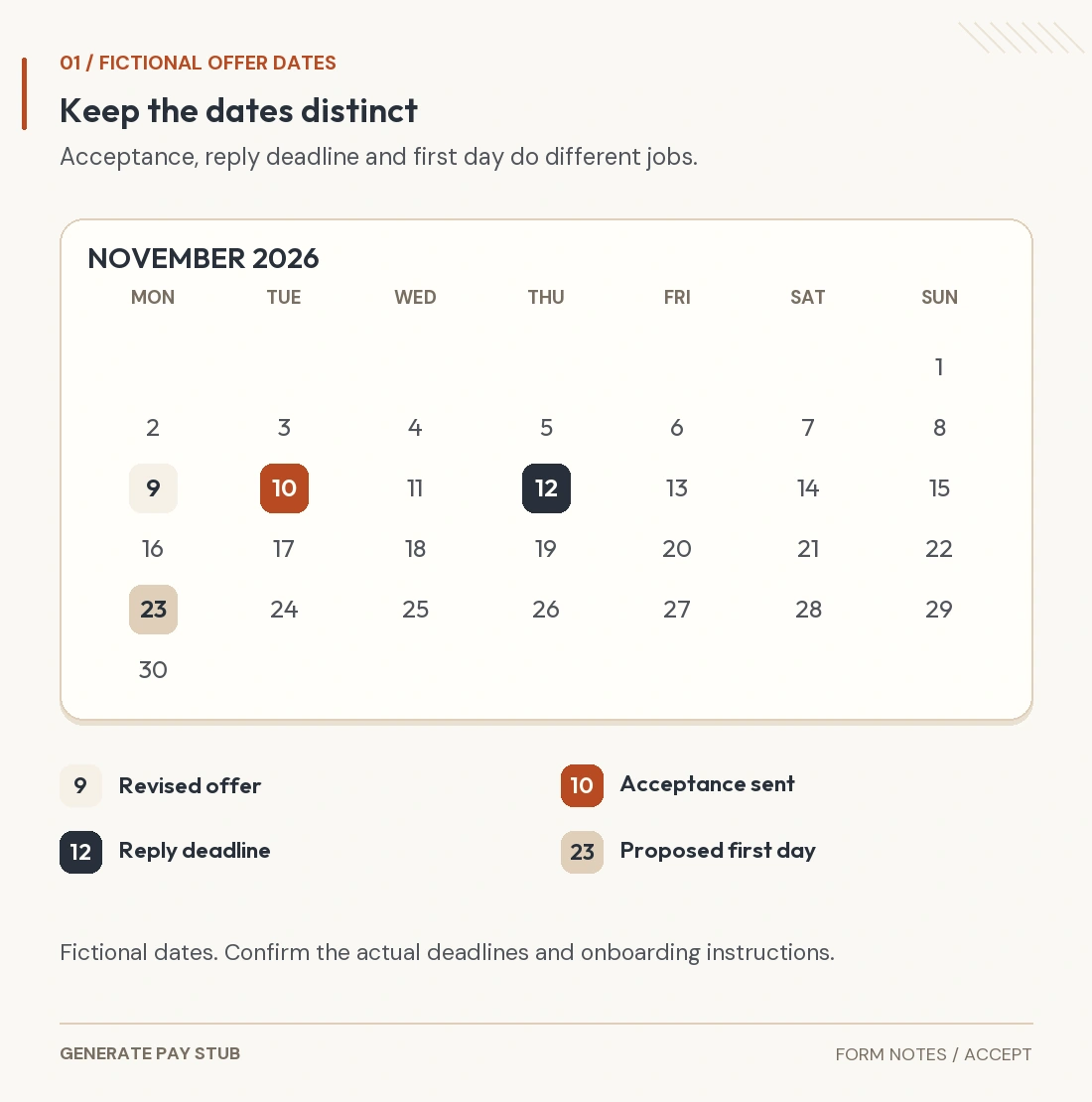
Distinguish the offer date, your response date, the reply deadline and the proposed first day. They describe different events. A revised offer can also have a different date from the original conversation.

In the fictional case, a November 10 letter can correctly accept the November 9 revised offer for a November 23 start. Do not change the start date to the day you sign merely because the document has a date field.
Confirm the exact deadline when it matters, including time zone and whether a portal or signed document is required. There is no universal response period supplied by this example. If more time is needed, request it before the stated deadline and obtain confirmation of any extension.
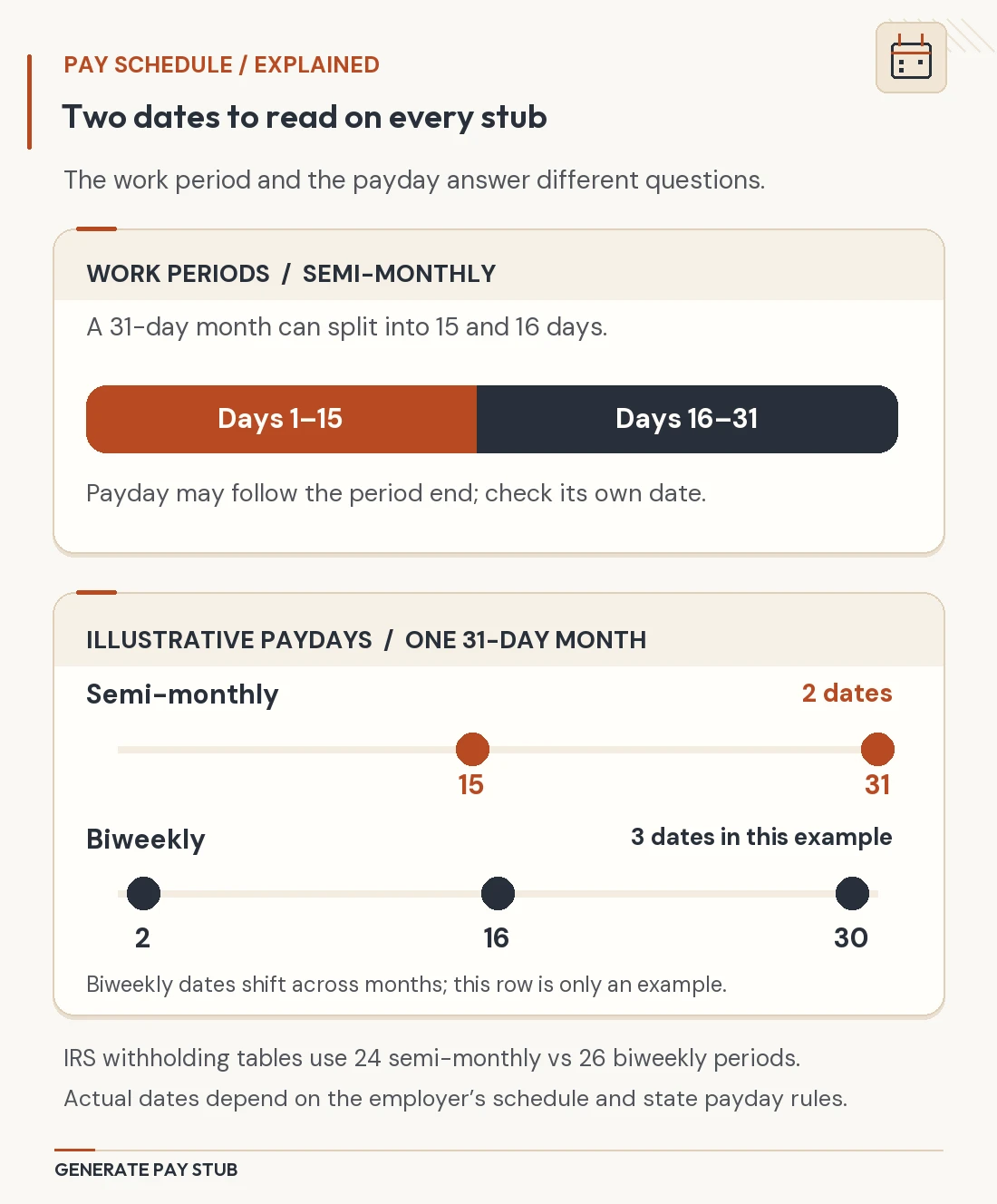
The first day of work and first payday also may differ. Ask for the payroll calendar rather than treating the start date as a promised deposit date. See our payroll frequency and schedule guide for the underlying distinction.
Should you repeat salary, benefits and every offer condition?
Repeat only what helps identify the agreement accurately. Referring to the dated offer can avoid a shortened paraphrase that drops an important qualification. If you restate compensation, preserve its basis and distinguish base pay from a target bonus, commission or one-time payment.
For benefits, “as described in the offer and benefit documents” may be more precise than inventing a coverage date or employer contribution from memory. Review the actual plan information. A statement that you accept does not demonstrate that a condition, credential check or enrollment step has already been completed.
Likewise, do not insert a new location, work schedule or start date into the acceptance and assume it has been approved. Ask for agreement to the change, then make the response consistent with the final terms.
What if something changes or you reconsider after accepting?
Communicate promptly and review the actual obligations before making another commitment. If an error is discovered in your response, identify the specific mistake and request confirmation of the correction. If the employer changes the offer, obtain the updated terms and consider what response is appropriate.
Harvard's career guidance treats acceptance as a good-faith commitment and recommends getting advice when reconsidering an accepted offer. That professional guidance does not determine whether a particular employment contract, repayment provision or other obligation is enforceable. Seek individual advice when the consequences are material.
A response requesting different salary or conditions should be clearly presented as a discussion of those requested changes. Avoid using an automatic acceptance template to manage an unresolved negotiation. The reader should understand your intended status without having to reconcile contradictory sentences.
What should you do after sending the acceptance?
Confirm receipt and obtain the practical first-day instructions. Keep the sent message, any signed document, the employer's confirmation and the accepted offer together. Record the approved work location, reporting time, contact person and arrangements for equipment where relevant.
Follow the legitimate onboarding process for tax and employment documents. Form I-9's employee section is due by the first day of employment and may not be completed before the job offer has been accepted. The acceptance letter does not perform that verification. USCIS: Form I-9.
Keep sensitive payroll information in the verified onboarding channel rather than adding it to an acceptance email thread. Ask the employer about any missing instructions and retain the confirmed arrangements for your first day.
How can you prepare an acceptance PDF with Generate Pay Stub?
Use the builder to present an already agreed decision. The acceptance-letter guide describes the optional document workflow. In the job offer acceptance builder, enter the employer, role, agreed start date and your details from the reviewed offer.
Compensation can be included when you want to restate it. Check the rate period and payment frequency separately. Add only wording you have reviewed, inspect all preview pages, and check the signature choice before completing the document under the tool's current terms.
The builder creates the letter from your entries; it does not automatically respond to the employer. If you leave a signature blank for later, handle the required signing and delivery steps yourself. An ordinary email or the employer's own acceptance form may already meet its requested communication format; purchasing a separate PDF is optional.
Examples are for writing guidance only. Obtain appropriate advice about an individual offer, contractual obligation or disputed change before relying on a sample response.